
Long Uncertain road Back to recovery for Area Farmers and ranchers
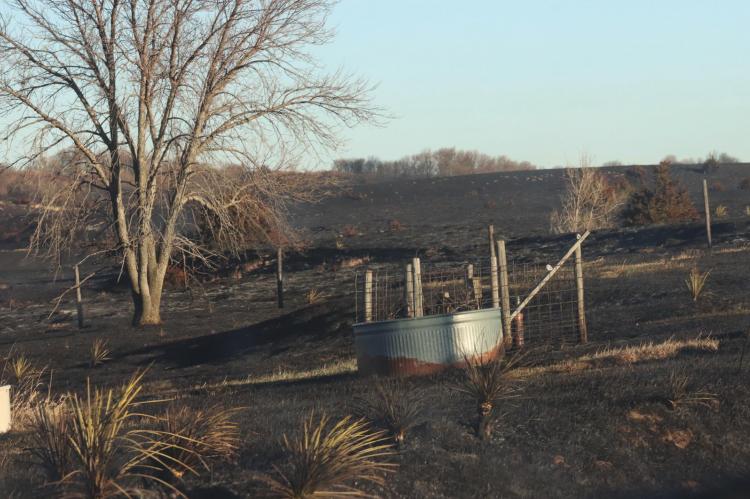
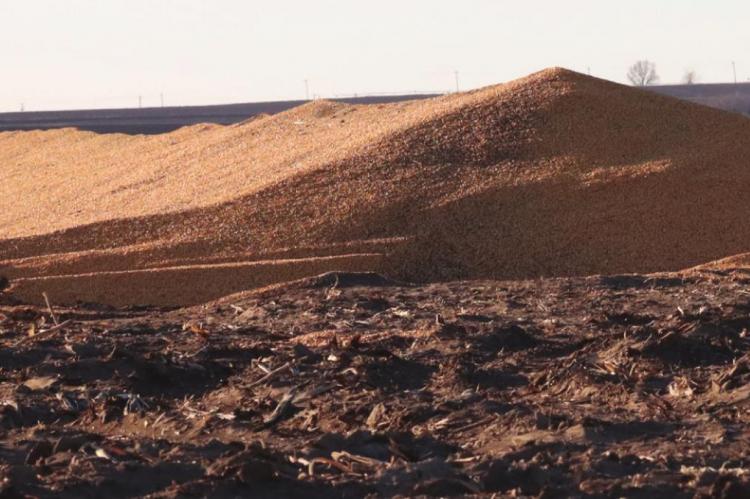
ARAPAHOE – Last week, Rich and Judy Breinig heard from one of their daughters that she had seen Governor Pete Ricketts on the local news in Omaha surveying the damage on their family farm that was caused by the wildfire that destroyed their home.
While in the area, the Governor met with representatives from the USDA, Nebraska Farm Bureau, the Nebraska Emergency Management Agency as well as local officials to discuss the road to recovery following the wildfire that burned 35,000 acres across over twenty miles in Furnas and Gosper counties.
In the aftermath of what locals verify has proven to be the most devastating fire in this area in their lifetimes, one thing is clear: Without rain, it is difficult to determine what the road to recovery will look like.
According to agronomist Jason Hambidge who works for the Edison Ag Valley Co-Op, there’s a lot of unknow factors going forward.
“The best pathway to recovery is for us to have moisture,” he said. “There’s a lot of uncertainty right now because we need rain for the grasslands to recover. With rain, the pastures would green up again fairly quickly.
When asked if he advocates planting cover crops before rainfall, he replied that would be risky.
“You could use up the rest of the moisture in the ground,” he said. For that reason, he advises waiting, but he understands the dilemma that area farmers are facing.
When residue is burned, most nitrogen and sulfur in the residue are lost, but the phosphorus and potassium are retained in the ash. That is why some farmers want to plant cover crops, so the topsoil doesn’t blow away.
The damage is still being assessed and the continued drought conditions coupled with warm weather as the summer months approach give areas farmers and ranchers reason for concern.
Dick Helms, the owner/ manager at Flying H Genetic says that it is difficult for everyone to determine exactl how to move forward during the drought.
“The fire has compounded the drought 10-fold,” he said
Helms says he is grateful that firefighters saved his home. He doesn’t know the best solution for building back thee 700 acres of dryland and pastureland on the east side of 283 that was burned.
“With dryland fields, the issue will be dust storms and it is difficult to know what to do because agronomists are telling us not to do anything because disking will harm the soil. Once we get a rain, some of the damage to the soil is repaired because the microbes in the topsoil are reactivated and something could be planted and germinated.”
He explained that “The irrigated fields got the hottes because dryland cornfields and soybean fields do not have the residue.”
According to Helms, “if pivots were running, they usually survived. But a lot of the pivots got damaged or destroyed,” he shared before continuing, “The problem with a lot of this is that it will be almost impossible to replace burned up tires or transformers to run those pivots this summer. Some farmers may lose the entire irrigation season.”
Anothe availability of products like barbed wire for fences and replacement pivots and parts for irrigated fields.
Helms, whose family has had a registered cattle operation since 1949, says that before the fire, it was difficult for some cattle operations to find pastures to graze their cattle, but now the problem has been exacerbated.
“Once the pastures green up, the grass needs to be three or four inches tall before you allow cattle to graze to get the photosynthesis up. “It’s important to replenish the root system.”
He continued, “We might not be able to graze those pastures until June or July, so it is going to be necessary to supplement with feed.
“Most people start turning their cattle out to pasture in May so with the price of hay being so high, it is going to present an additional financial strain on cattle operations.”
Dan Warner, who farms south of Arapahoe, is a fourth or fifth generation local farmer. He’s thankful that their farmland did not experience a lot of the burning.
Warner farms with his brother and father and says that although his brother lost a couple of center pivots east of town, in the scheme of things, his family did not suffer the damage that many of their neighbors did.
“We were impacted by small pivots, a total of 140 acres, but we are thankful that none of our homes or livestock were affected,” he said.
At the time of this writing, they are still getting estimates from insurance adjusters to find out what it will take to rebuild those pivots. “We are not for sure if they are totaled or not,” he said. “This will be a long process because the availability of new pivots is difficult this time of year.”
Warner knows that the recovery process if going to take time.
“The damage to soil is concerning. The fertilizer on the top burned off so we lost all the residue that is needed to keep the soil from blowing,” he shared. “It will be a few years to rebuild the soil profile back to what it was.”
He is more optimistic about the pastureland. “With rain, hopefully the pasture will rebound quickly.”
However, if the drought continues, like other area farmers and ranchers, they won’t be able to use the pasture for grazing this year.
Like so many others, they also lost most of their fence in the fire.
And like so many other area farmers who have experienced losses and setbacks, Warner is thankful for his community and optimistic about the future.
“This is a great community. People have been so helpful. It was overwhelming how engaged people got rather quickly to keep everybody safe.”
As many farmers are looking for solutions and seeking the advice of agricultural experts, a post by an area farmer on Facebook did not go unnoticed, as he asked others to join him in praying for rain.
